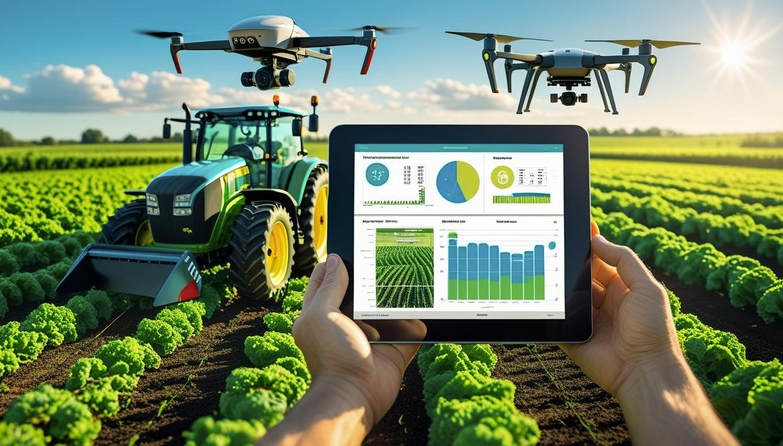
AI in crop yield prediction utilizes complex algorithms to analyze diverse datasets, including meteorological data, soil characteristics, and satellite imagery. This analytical approach allows for precise forecasting, aiding farmers in decision-making processes and resource management. However, the integration of AI faces significant challenges, such as data quality and environmental factors. Understanding these complexities is essential for evaluating the true potential of AI in transforming agricultural practices and enhancing sustainability.
How AI Analyzes Data for Crop Yield Predictions
As agricultural challenges intensify due to climate change and population growth, AI technology has emerged as a pivotal tool in analyzing vast datasets for crop yield predictions.
By integrating diverse data sources—such as weather patterns, soil health, and satellite imagery—AI employs predictive modeling techniques.
This analytical approach enables more accurate forecasts, facilitating informed decision-making for farmers seeking to optimize production amid dynamic environmental conditions.
The Benefits of Using AI in Agriculture
While traditional agricultural practices have often relied on historical data and intuition, the integration of AI technology presents transformative benefits that enhance efficiency and productivity.
AI facilitates precision agriculture by enabling real-time data integration, allowing farmers to make informed decisions based on comprehensive analytics. This leads to optimized resource allocation, reduced waste, and improved crop yields, ultimately promoting sustainable agricultural practices.
Challenges and Limitations of AI in Crop Yield Forecasting
Despite the significant advancements in artificial intelligence, several challenges and limitations persist in the realm of crop yield forecasting.
Issues such as data quality directly impact model accuracy, while environmental factors introduce variability that complicates predictions.
Furthermore, inadequate human oversight can lead to erroneous conclusions, and concerns regarding data privacy may hinder technology adoption, ultimately restricting the potential of AI in agricultural applications.
See also: Upgrade Your Marketing 648614871 Digital Tools
Future Trends in AI-Driven Crop Yield Prediction
Emerging technologies are poised to revolutionize AI-driven crop yield prediction, as advancements in machine learning algorithms and data analytics pave the way for more accurate and reliable forecasting.
Future trends will integrate precision agriculture techniques with climate adaptation strategies, enabling farmers to optimize resource use and mitigate risks associated with climate variability.
This synergy promises enhanced sustainability and resilience in agricultural practices.
Conclusion
In conclusion, the integration of AI in crop yield prediction represents a pivotal shift akin to the invention of the plow, transforming agricultural practices through data-driven insights. While challenges such as data quality and environmental variability persist, the continual evolution of machine learning technologies offers promising avenues for enhancing forecasting accuracy. As the agricultural sector navigates the complexities of climate change and population growth, AI stands as a beacon of innovation, fostering sustainable and resilient farming practices.