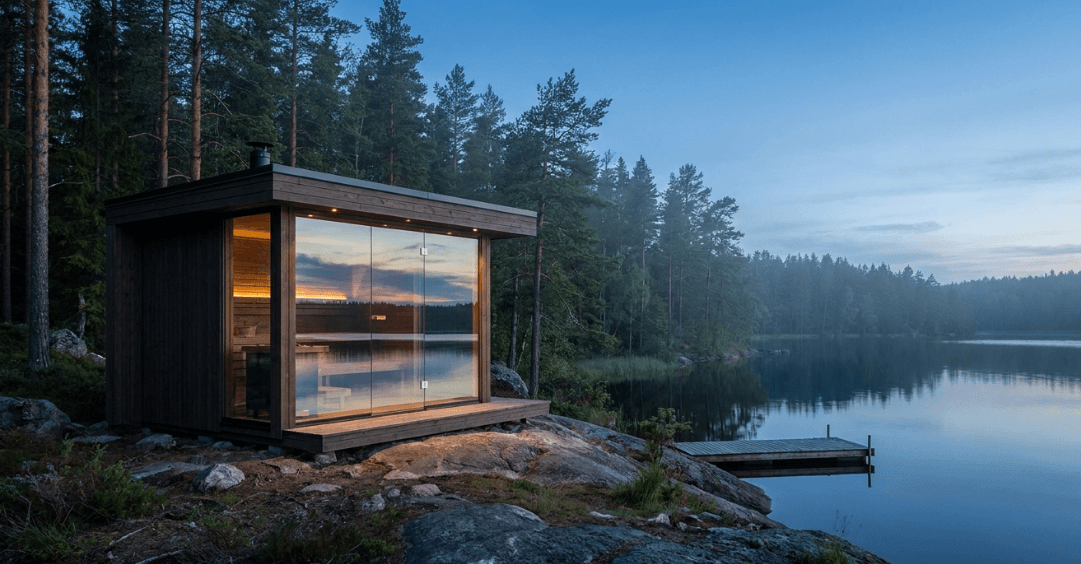
A small outdoor sauna sized for two to three people generally runs $5,500 to $9,000 once you count the unit, a basic pad, and electrical work, while a four to six person cabin with a proper heater and dedicated circuit lands closer to $9,000 to $16,000. The unit price is only part of the number that matters. Delivery, the foundation, and the electrical run routinely add 30 to 45 percent on top of the sticker price, and that gap is where most first-time buyers get surprised.
What Actually Determines the Total Price?
Four things drive cost more than anything else: seating capacity, wood species, heater type, and how much site work the yard needs before the sauna can go in. A two-person barrel and a six-person cabin are not the same purchase even if both get marketed as “outdoor saunas,” and a lot lined with cedar on all interior surfaces will always cost more than one using a cedar exterior over a cheaper interior liner. Heater choice matters just as much. A traditional stove capable of holding 180 degrees Fahrenheit with steam needs more copper in the wiring and more kilowatts than an infrared panel system built to run at 130 to 140 degrees.
Site work is the variable buyers forget to price out before ordering. A flat, already-poured patio needs almost nothing beyond a level check. A sloped lawn, tree roots, or a yard without existing power nearby can add a few thousand dollars in grading, a gravel or concrete pad, and conduit run from the house before the sauna itself even arrives.
Unit Cost by Type, for a Small Footprint
Compact barrel saunas built for two to three people, typically six to seven feet in diameter, are the least expensive category, often $3,500 to $6,000 for the unit alone from an established maker using kiln-dried cedar or heat-treated spruce staves. Small cabin-style outdoor saunas in the same capacity range usually run $4,500 to $7,500, a premium that buys square wall space, easier bench layout, and simpler window and door options. Compact infrared cabins built for outdoor use, plug-in and lighter on infrastructure, tend to sit in a similar $3,000 to $5,500 band for two-person models, though they trade the higher, steam-capable heat of a traditional stove for a lower, drier warmth.
What Installation Adds to the Bill
A traditional electric stove sized for a compact cabin, usually 6 to 8 kilowatts, needs a dedicated 240-volt circuit, and running that from an existing panel costs anywhere from $600 for a short, easy run to $2,500 or more if the panel is full or the trench is long. Wood-fired stoves skip the electrical circuit entirely but need a code-compliant chimney, clearance to combustibles, and a dry storage spot for fuel. A concrete or paver pad sized for a small barrel or cabin, four inches thick with a gravel base, generally costs $800 to $2,000 depending on region and whether it is DIY or contracted. Delivery for a fully built unit, as opposed to a flat-pack kit, commonly adds $300 to $900 depending on distance from the manufacturer.
Keeping Costs Down When the Yard Is Tight
Small lots have one real advantage: a compact footprint keeps every downstream cost lower too. A six-foot barrel or a small deck-mounted infrared cabin needs less pad, less wire run, and in many municipalities stays under the square footage threshold that triggers a full building permit, though the electrical work itself almost always needs its own permit regardless of structure size. Placing the unit against an existing patio or deck, rather than clearing new ground, is usually the single biggest way to cut installed cost, since it removes grading and pad work from the budget. Buyers comparing current unit pricing across barrel, cabin, and infrared formats for a small yard can explore the range that specialty retailers currently carry to see how capacity and heater type move the price.
Is the Ongoing Cost Worth It?
Operating cost is modest next to the upfront number. A traditional electric stove drawing 6 kilowatts for a 45-minute warm-up and hour-long session, run three times a week, adds roughly $15 to $30 a month to an electric bill depending on local rates. Infrared panels draw less and cost less to run per session, though sessions often last longer. The larger question buyers actually weigh is whether frequent sauna use is worth building into a routine at all. Research on that question comes almost entirely from Finland, where sauna bathing is a lifelong habit for much of the population. A review in Mayo Clinic Proceedings summarizing this evidence base described regular sauna bathing as associated with lower cardiovascular event rates and improved measures of vascular function, and a separate systematic review of clinical studies on dry sauna bathing reported broadly similar associations across cardiovascular and respiratory outcomes. An earlier review in The American Journal of Medicine reached comparable conclusions while also cataloging who should be cautious, including people with unstable angina or a recent heart attack. None of this is proof that a sauna in the backyard changes any one person’s health outcome, since the underlying studies are observational, but it is a more specific case than most marketing copy makes it out to be.
Frequently Asked Questions
What does a small outdoor sauna cost installed? A compact two to three person unit, plus basic electrical and a simple pad, typically lands between $5,500 and $9,000, with the unit itself usually 55 to 70 percent of that total.
Is a barrel or a cabin sauna cheaper for a small yard? Barrel saunas are usually the lower-cost option per person of capacity, since the curved shell uses less lumber and needs a smaller pad. A cabin of equal capacity generally costs more but insulates and lays out benches more easily.
Do I need a permit for a small backyard sauna? Many places treat a small detached sauna as an accessory structure that skips a building permit, though the electrical work almost always needs its own permit. Rules vary by city and county.
Can an infrared unit run on a regular household outlet? Most compact infrared cabins run on a standard 120-volt, 15 or 20 amp circuit. A traditional wood-fired or electric-stove sauna almost always needs a dedicated 240-volt circuit instead.
Does regular sauna use actually have measurable health benefits? Large Finnish cohort studies have found regular sauna bathing associated with lower cardiovascular disease and all-cause mortality rates. These are population-level associations from observational research, not proof for any one individual.
References
- Cardiovascular and Other Health Benefits of Sauna Bathing: A Review of the Evidence, Mayo Clinic Proceedings, 2018
- Benefits and risks of sauna bathing, The American Journal of Medicine, 2001
- Effects of heat and cold on health, with special reference to Finnish sauna bathing, American Journal of Physiology – Regulatory, Integrative and Comparative Physiology, 2018